Intercultural Design | Project 2 / Field Study
26/02/2024 - 08/02/2024 | Week 4 - Week 5
Nadia Chong Wen / 0355736 / Bachelor's of Design (Honours) in Creative Media.
Project 2 - Field Study
LECTURE NOTES (WEEK 4 - WEEK 5)
NO LECTURE.
INSTRUCTIONS
PROJECT 2 - FIELD NOTES
For this project, we continued on from the topic we chose during Project 1, which was the Day of the Dead. We needed to get secondary information and research for this project through interviews, forms, etc. Then we would need to present any physical item we got from the culture or go to places that give information about Day of the Dead in order to learn more about it more intimately.
1. Looking for Interviewee
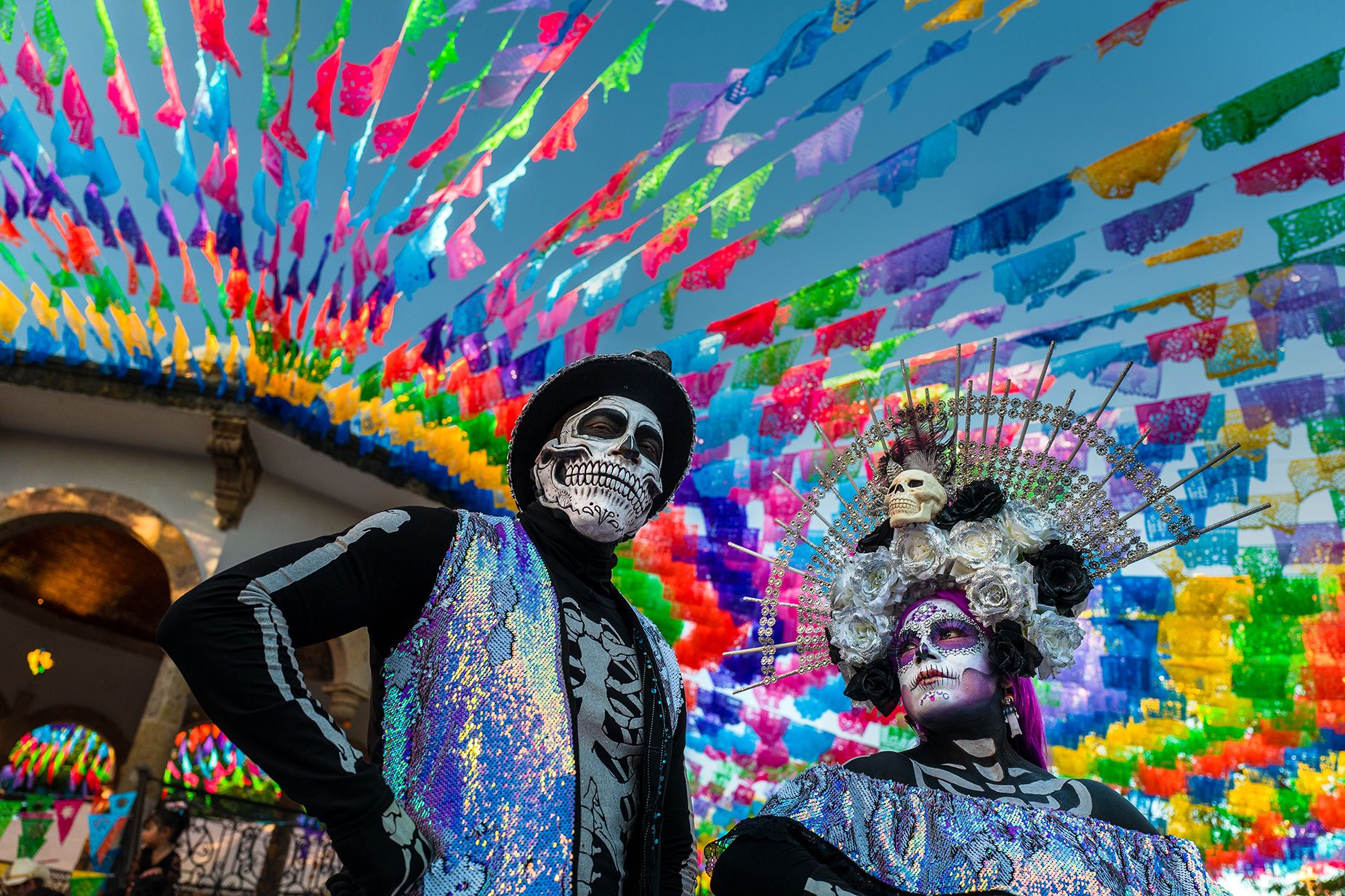 Figure 1.0 | Day of the Dead
Before searching for an interviewee, my groupmates and I had a group call to clarify whether we would be sticking to the Day of the Dead and we all agreed to continue on with it. We all understood it might've been challenging, considering some of us were more passive, but we accepted it nonetheless.
One of my groupmates, Cassandra, was able to get in contact with someone who is familiar with Mexican culture through her father. He had lived in Mexico for a couple of years due to work and he knew about the culture that we were trying to learn more about, especially having his own personal experiences with it. With that, Cassandra scheduled an online meeting with him.
2. Interview Questions

We decided to split the tasks into two categories. Three of us would be focusing on designing the slides and handling the visual information we need to show; the other three would be responsible for coming up with questions.
Me and two other groupmates were tasked with coming up with some questions to ask about Day of the Dead in order to learn more about it through out interviewee. It was difficult to find the right questions to ask due to there being many sort of open ended questions, but we ended up looking towards ChatGPT to guide us slightly on what we should be asking while also making some of our own questions with inspiration.
Figure 1.1 here shows the brief idea of one of my groupmates so that we could have a flow on how to continue on with it. We decided this interview should be an informal interview, so there's less pressure from both sides. We would then send our interview questions for Mr. Sathish, the interviewee, to have a look before we conduct the interview to ensure he is comfortable with the questions and to be prepared.

Me and the others wrote down different questions we thought were important into separate categories and checked the questions to see which of the questions are more important and eliminating the ones which were not, like things about the culture that we could easily find on the internet. Once we were done, we sent the interview questions to the interviewee for him to prepare.
3. Interview

Our interview took place across a zoom call at first and got his consent at recording the meeting. With that, he talked about the Day of the Dead in his personal experiences during his time in Mexico. It was a very insightful interview and we learned more about the personal side of the culture. We unfortunately faced some technical errors due to our slow wifi, hence we needed to reschedule the call again but this time on Whatsapp.
 Figure 1.4 | Whatsapp Interview Screenshot from Cassandra
We decided to go on Whatsapp call so it would be better due to the internet connection being a problem the last time we had an interview. This time was much better and the audio was loud and clear.
 Figure 1.5 | Image sent by Mr. Satish
In the process, Mr. Satish sent us photos of his time in Mexico during the Day of the Dead as he was explaining everything. It was a very nice look into the culture, and he was also willing to share some more of his memories of his time, which was always welcome.
4. Final Project 2
Figure 1.5 | Finalized Questions
Figure 1.6 | Project 2 Slides (Day of the Dead) (PDF)
FEEDBACK
Week 4
- No Feedback Given
Week 5
General Feedback
- Speak with your supervisors upon your current progress
- Use the hidden channels that is prepared.
REFLECTION
The decision to go on with the Day of the Dead made me really happy due to it being my suggestion to go for it in the first place since it was a very colorful and wholesome culture in my eyes. Everyone worked hard on researching on it and we thought it would be waste if we just switched it up.
The main challege of this project was finding someone who was willing to help us with an interview on the Day of the Dead. I didn't realise that getting information from interviews or forms would be a thing until my groupmate mentioned it to me. All of us were really confused as to how to go from there, and just going into a Mexican embassy didn't feel right. We managed to get it resolved thanks to Cassandra though, and we overcame that together as a group.
Coming up with the questions were especially hard for me since I'm not someone who would ask too much about anything as long as enough information was given in my point of view. But I managed to get in some after some brainstorming on what would be the right questions to ask on this topic. It was challenging, but it managed to make me think more on what I should do. I also discovered how hard it was to write and listen at the same time when I tasked to be the typewriter of the answers.
I did enjoy this experience though. It was an interesting look into the Day of the Dead Culture and it challenged how I should look into cultures from other countries and using sources other than those found on the internet.
FURTHER READING
Ofrenda
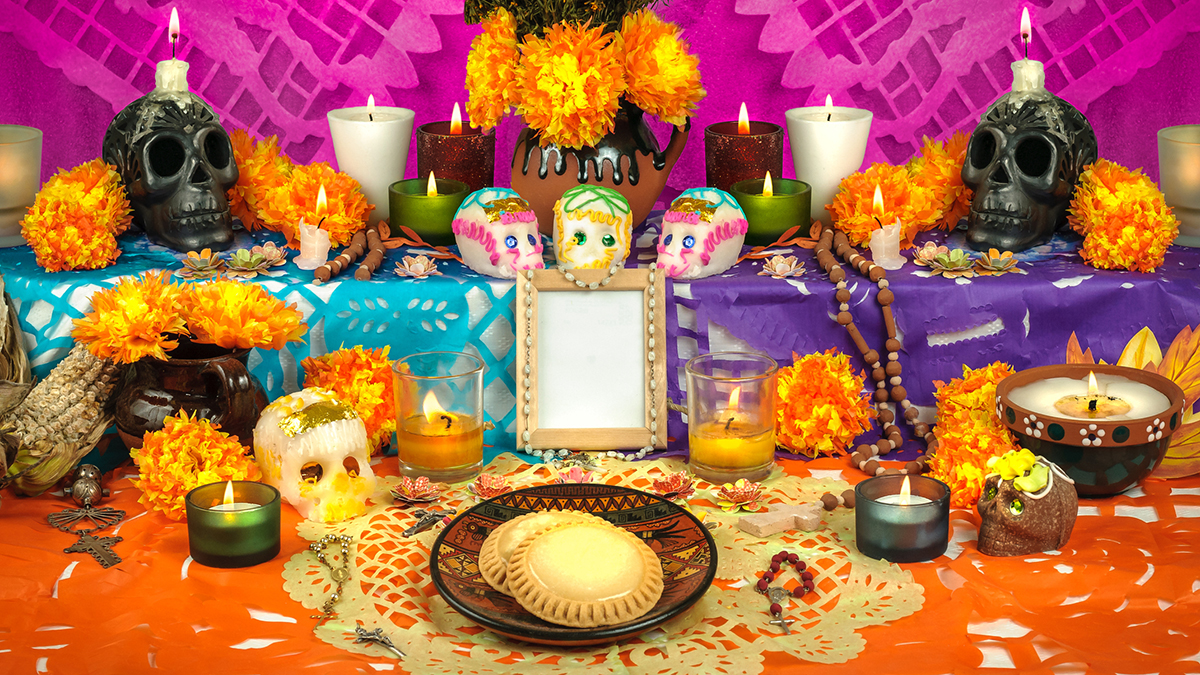
The ofrenda is an altar that is set up for the day of the dead that has its origins predating the pre-hispanic era and its elements hold the idea of celebrating death in life. In the present day, the ofrenda and its significance within the culture of Day of the Dead are the most important part of the celebration.
The ofrenda table usually hold a set of items that are dedicated to the person the altar is dedicated to and have multiple other items such as pan de muerto and marigold petals. The set of items often includes photographs and belongings that were from the deceased and can include things they loved to eat and so on.
The standard altar will have a table set up, if it were possible, with two levels by using a smaller flat surface on top. A bright-colored tablecloth and adorned with china paper cut in different patterns will be then used to cover the table. On the top, photographs would be placed along with their belongings to mean that the offerings are meant for them. For example, children would have their favorite toys. The lower part of the altar are where the offerings, such as food, are placed.
REFERENCES
- Day of The Dead. (n.d.) The Ofrenda.
https://dayofthedead.holiday/traditions/the-ofrenda/


Comments
Post a Comment