Design Principles | Task 2 / Visual Analysis
24/02/2024 - 08/03/2024 | Week 4 - Week 5
Nadia Chong Wen / 0355736 / Bachelor's of Design (Honours) in Creative Media.
Task 2 - Visual Analysis
LECTURE NOTES (WEEK 4 - WEEK 5)
Visual Analysis
Visual Analysis is a method of understanding designs that focuses on visual elements and principles. To put it in simpler terms, it is a description and explanation of visual structures for the sake of it.
The purpose of visual analysis is to recognise the choices the designer made on their piece as they created it, as well as understand how the formal properties of a design communicate ideas, content, or meaning.
INSTRUCTIONS
TASK 2 - VISUAL ANALYSIS
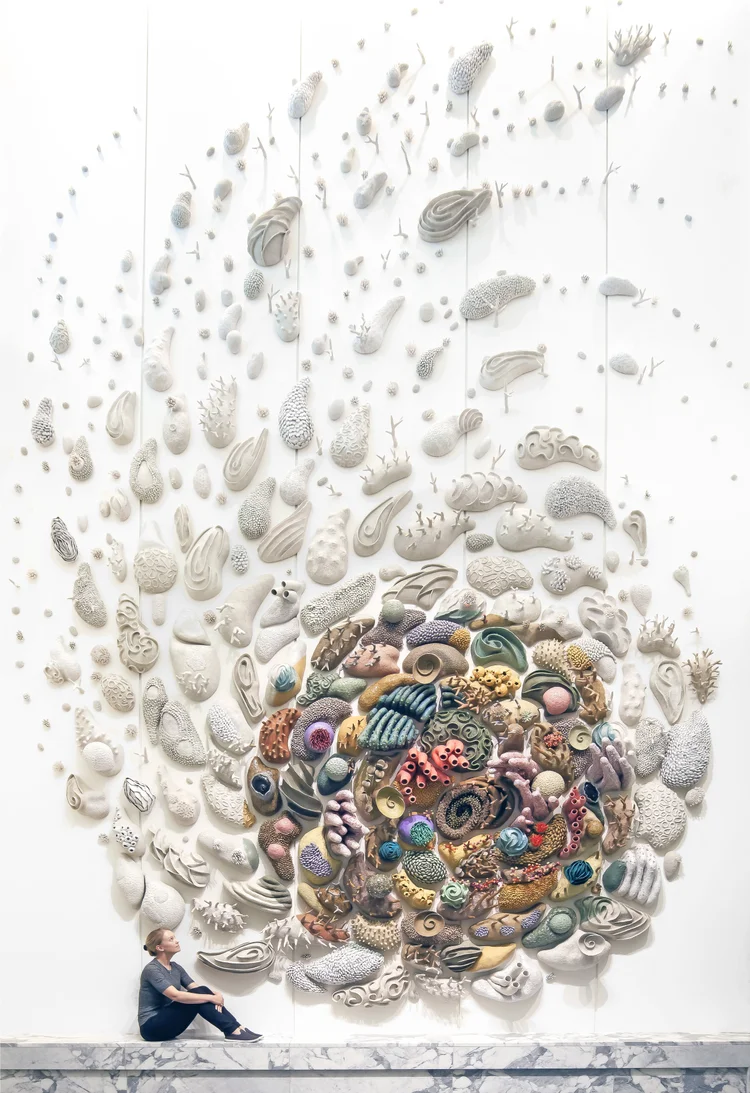
This task requires you to assess, investigate, document and analyze the existing art/design work you selected in Task 1. You will study the design principles found in that work, as well as the size, placement, purpose, effectiveness of the design in relation to the UNSDG goal that you have chosen.
Phase 1 - Observation
This design work is a sculpture. The sculptures are multiple pieces of hollow ceramic stuck to another medium, which would be a wall, forming a beautiful swirl which forms from the top of the wall. The sizes of the ceramic corals vary from small to big occasionally as the design flows down to the bottom, where the design starts to gain its weight with multiple large pieces of ceramic corals. As for the visual elements of the design, the focus of the design are the colorful ceramic corals that the white corals are swirling into. Overall, it's a simple but beautiful design. (102 words)
Phase 2 - Analysis
This design seems to be symmetrically balanced. Repetition can be seen throughout the whole design, with multiple ceramic corals, big and small, making multiple separate coral-like sculptures to become one design. The white "corals" form a swirl (movement) that leads down to the bottom part of the design, a beautiful and vibrant array of colorful ceramic corals that is the focus point (emphasis) of Confluence. The stark contrast from the bleached corals of the piece and the colored corals is used to differentiate what the piece is referencing to; The colorful living corals and the outer bleached dead corals in the real world. The contrast and the movement of the piece, as well as the colors, managed to make a form of unity within the piece. (126 words)
Phase 3 - Interpretation
 Figure 1.1 | Our Changing Seas III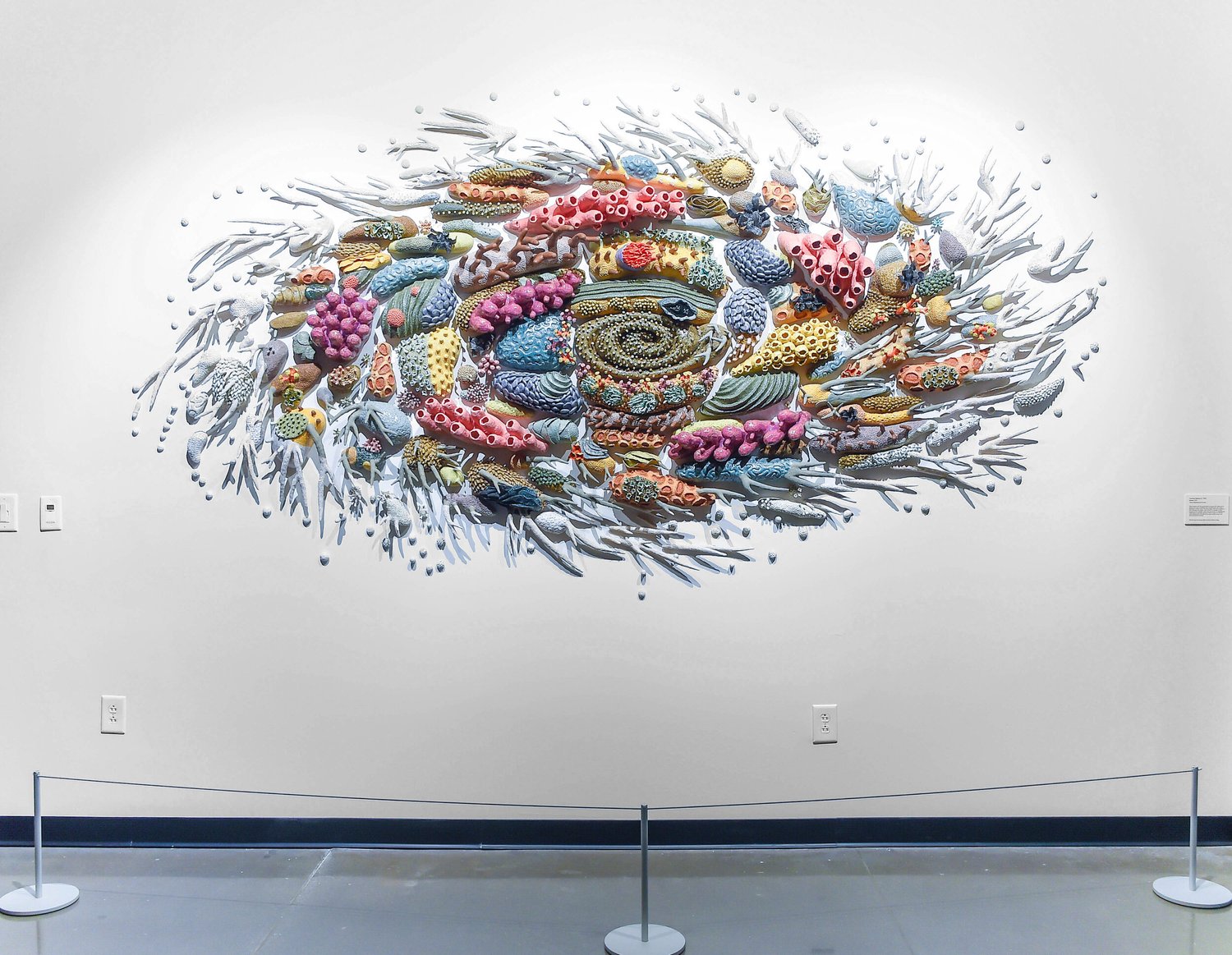
Confluence is a sculpture piece designed to pay homage to Indonesia’s coral reefs and the value they provide to Indonesians and the world that was made in 2017-2018. I find that Courtney Mattison's art are works of Environmental art, or also known as Ecological art. It is an art movement made to draw attention to the world's environmental issues as well as our relationship towards it as people (The Art Story, n.d.), which perfectly encapsulates the reason why the artist has made Confluence in the first place. It is also an interpretation of the Indonesian coral reefs and the affect changes in the environment had on it. (103 words)
FEEDBACK
Week 4
General Feedback
- Look into and understand visual analysis
- Find two other artworks similar to chosen artwork
- Research more about the artist chosen in order to write interpretation
Personal Feedback
- Observe the artworks of Courtney Mattison
- Study Lecture 6
Week 5
General Feedback
- Start sketching some ideas for Task 3
- Look into the movement or kind of design chosen design is inspired from
- Need to include citations for Phase 3
REFLECTION
This task was a bit challenging for me due to my inability to put what I see into words fully and properly, but I did what I could with my limited vocabulary. Learning more about Courtney Mattison made me admire how much thought and work she put into her work, much more the details she puts into each and every ceramic coral sculpture. She truly does care about the environment and especially life below the ocean like how I did when I was a little child.
Ms. Mattison exercises a lot of the design principles in order to make her design beautiful and pop out at the same time, and this task made me truly look into every nook and crany of what she does to make her art work. I find it impressive that the majority of her works are actually massive and bigger than a normal person, which is very telling of the amount of dedication she put into it. I really admire her for being able to produce art such as that.
I aspire to make a design that would do justice on her art for the ocean in my next task, and I hope to be as good as her in applying design principles as her in the future.
FURTHER READING
Meaning of Corals

Figure 1.0 | Coral Reef
After seeing how much love and care that Ms. Mattison put into her work, I decided to look into the meaning and symbolism of corals in art and design. Apparently, the coral is sometimes considered a precious stone even though it was actually a very tiny polyp. Corals are sessile animals that many consider to be similar to a plant due to how it takes root on the ocean floor (NOAA, n.d).
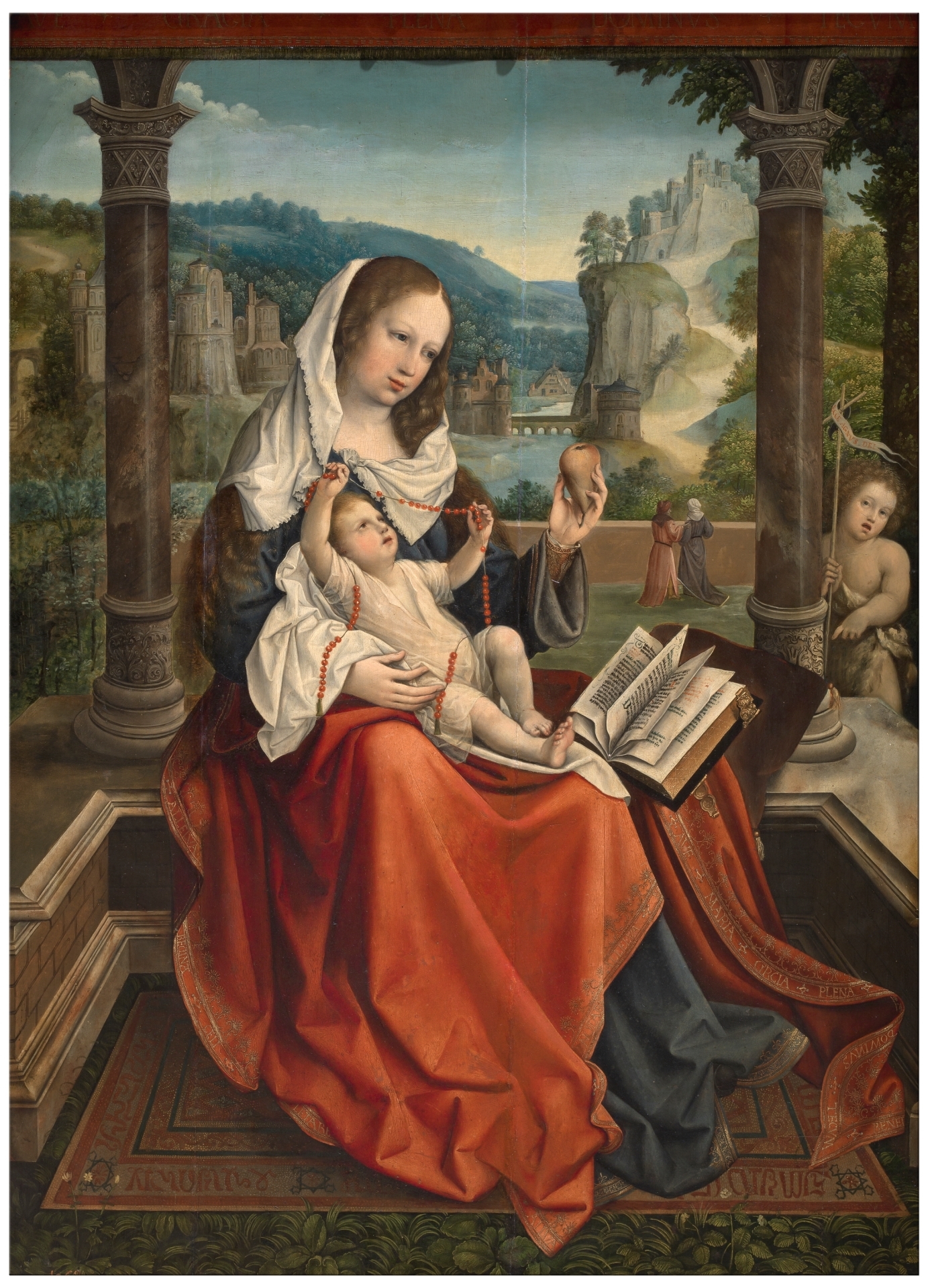
In ancient Rome and during the Middle Ages, coral was believed to have curative properties and thought to have ward off evil spells. Corals were used as a charm against danger and put around baby's necks. Christian iconography also inherited these practices. In scenes of the Madonna and Child, you can see a twig of coral in Christ’s hand or around his neck, as a sign of protection.A coral necklace and coral earrings are worn as ornaments by the personification of Africa in the representation of the four parts of the world.
There are more symbolism for corals than this as well. According to Greek legend, coral grew out of the drops of blood of the Gorgon Medusa (Cirlot, 2002, p. 62).

REFERENCES
- Torres, María Fernanda. (2022). Conveying the Fragility of Coral Reefs: An Interview with Courtney Mattison.
- The Art Story. (n.d.). Environmental Art.
- National Oceanic and Atmospheric Administration. NOAA. (n.d.) Are corals animals or plants?
- Cirlot, J. E. (2002). A Dictionary of Symbols. Mineola: Dover Publications
https://www.artshelp.com/courtney-mattison/
https://www.theartstory.org/movement/environmental-art/
https://oceanservice.noaa.gov/facts/coral.html#:~:text=Coral%2C%20a%20sessile%20animal%2C%20relies,people%20think%20corals%20are%20plants!


Comments
Post a Comment